Teaching · mentorship · scientific capacity building

Moving students from learning science to doing science.

I teach science as a way of thinking: asking tractable questions, making predictions, evaluating evidence, distinguishing among competing explanations, and communicating conclusions clearly. Across courses and mentorship, I progressively shift responsibility toward students so that they move from understanding scientific ideas to using them independently.

How I teach

Scientific reasoning is something students practice.

My course design starts from the intellectual work I want students to be able to do. Concepts provide the foundation, but the goal is application: students use evidence, evaluate explanations, and eventually construct questions and arguments of their own.

01 · Reasoning

Prediction → evidence → explanation

I build activities around explicit predictions and the evidence that would support, weaken, or distinguish among explanations. This shifts attention from memorizing the “right” answer to asking how we know what we know.
02 · Independence

Responsibility increases with practice

Early tasks make the reasoning visible and structured. Later tasks ask students to choose questions, evaluate methods, interpret results, use primary literature, and revise work in response to feedback.

03 · Inclusive pedagogy

Multiple routes into scientific participation

I use written preparation, small-group work, discussion, visual interpretation, data analysis, field observation, and low-stakes practice so participation does not depend on a single mode of communication or prior confidence.

Bloom's taxonomy as a design scaffold

Students move from conceptual foundations toward the higher-order work of scientific analysis, evaluation, and creation.

UNDERSTAND APPLY ANALYZE EVALUATE CREATE

Selected teaching materials

Course design and classroom practice.

These materials come from courses I have taught. Together they show how I structure a semester, use a single case to make scientific reasoning explicit, and integrate field, laboratory, quantitative, and discussion-based work within an ecology course.

Selected course design

Scientific Thinking: From Claims to Evidence

A course-design overview from Scientific Thinking at the American University in Cairo, showing the progression from skepticism and hypothesis formation to research validity, literature evaluation, and an iterative final project.

  • Bloom's taxonomy made explicit
  • Case-based and active learning
  • Feedback before final submission
Open course design PDF →

Instructor guide

Clever Hans: Testing Competing Explanations

A classroom case I use in Scientific Thinking. Students turn a surprising claim into competing explanations, predict discriminating tests, interpret the results, and decide what the evidence supports.

  • Hypothesis formulation
  • Experimental control and blinding
  • Evidence-to-inference reasoning
Open lesson PDF →

Selected syllabus

Conservation Biology & Sustainable Development

A shortened version of the Conservation Biology & Sustainable Development syllabus I used at Baruch College, retaining the course structure, assignments, grading, and representative field and quantitative activities.

  • Field + laboratory + classroom
  • R, spatial tools, and population models
  • Open-resource / zero-textbook design
Open sample syllabus PDF →

Mentorship in practice

Research becomes a pathway toward independence.

Mentorship can begin in a classroom, a graduate project, an early-career training programme, or a field collaboration. Across those settings, I try to expand the decisions a mentee can make and the scientific products they can claim as their own.

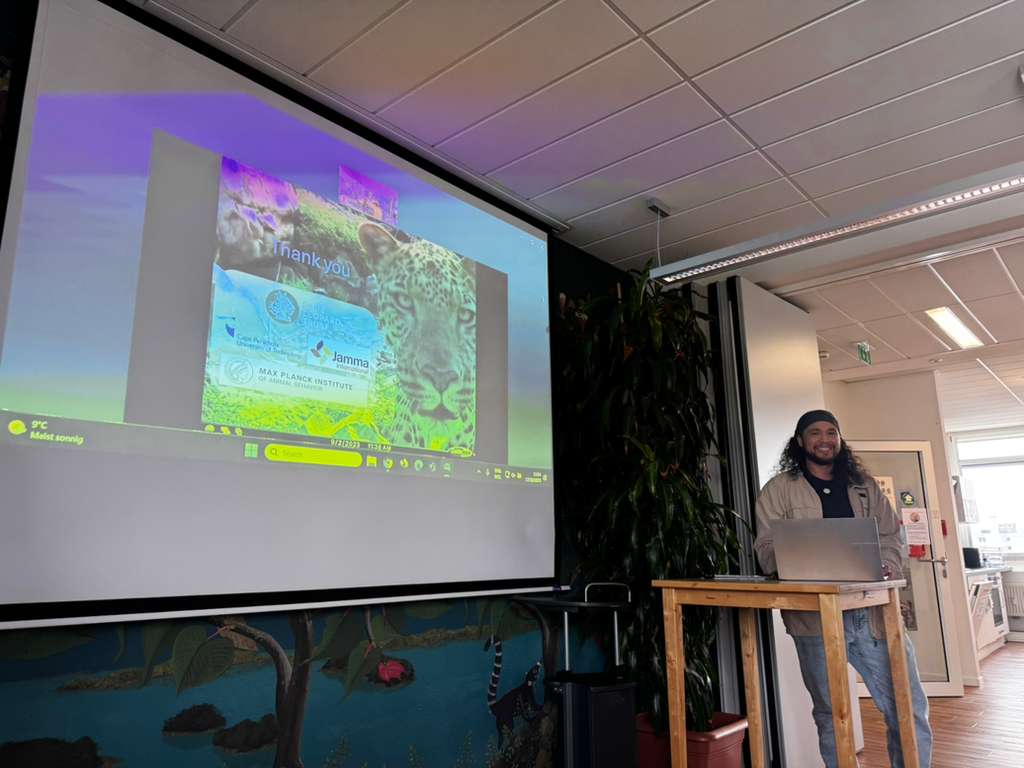
Joshua presenting his ARTEMIS research project at the programme's final symposium

ARTEMIS mentorship · scientific communication

From project development to presentation

Joshua presenting the results of his ARTEMIS research project at the programme's final symposium. Through ARTEMIS, I mentor early-career African researchers as they develop projects, strengthen research skills, and communicate their work to a scientific audience.

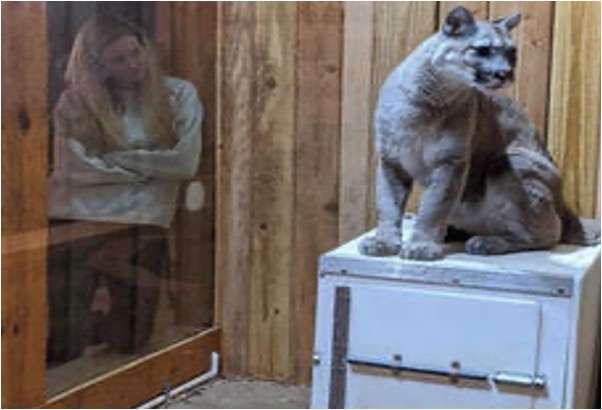
Victoria O'Connor conducting a carnivore cognition experiment

Graduate research · experimental design

Learning through research

Victoria O'Connor conducting cognition research during her graduate project. I mentored the work from experimental design through analysis and publication; the project became a peer-reviewed paper and part of her progression into doctoral research.

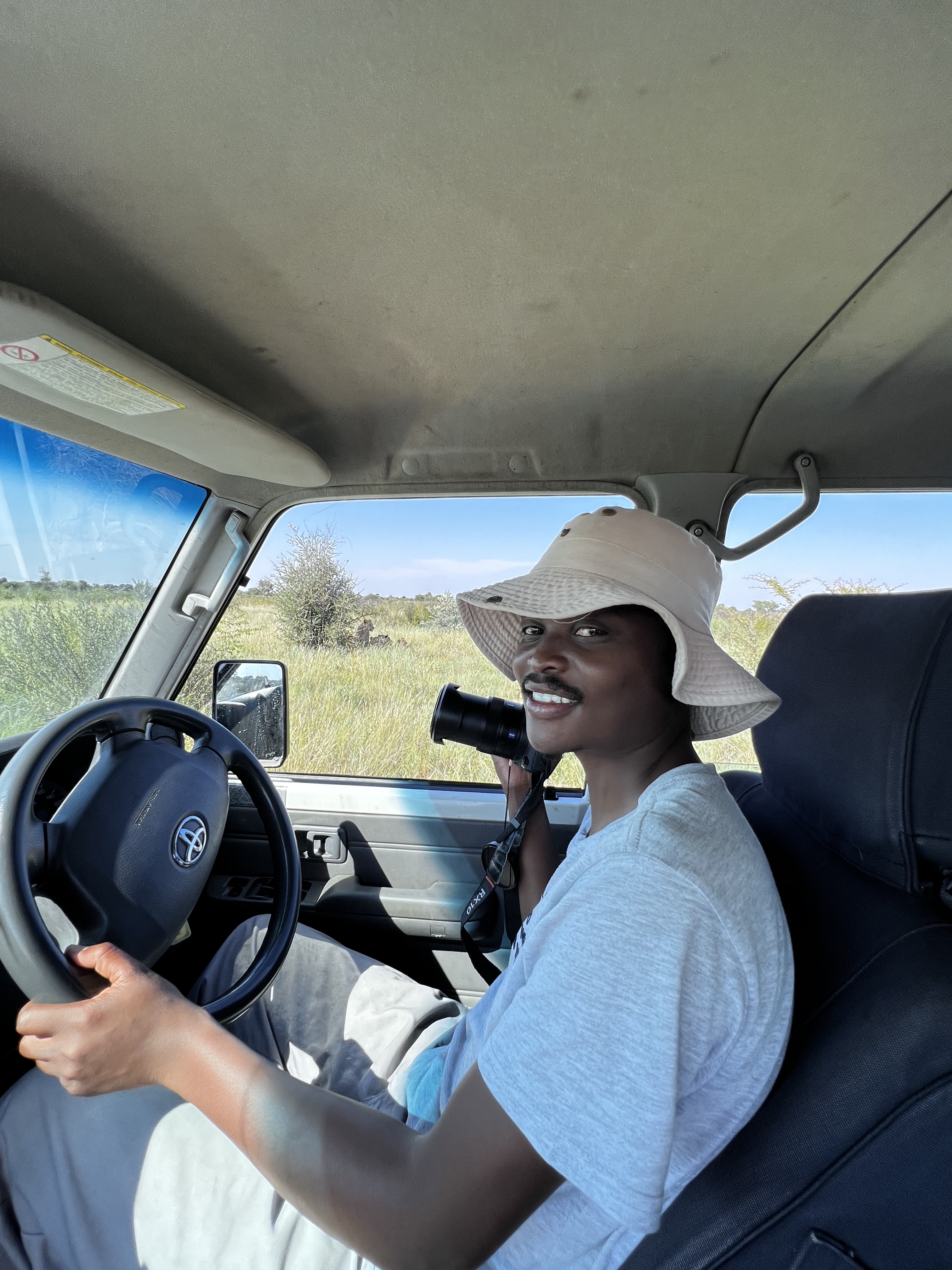
Trevor Balone collecting field data during lion research in Botswana

Field research · capacity building

Expanding participation in science

Trevor Balone collecting field data during long-term lion research in Botswana. Our collaboration has expanded from field data collection toward scientific presentation, professional certification, authorship, and postgraduate training.

Student research outcomes

Intern → coauthor → independent project

Niharika Marella

Entered the comparative lion programme through an internship, contributed to the 2026 Animal Behaviour paper Beyond the Serengeti Lion, and now leads first-author research.

MSc research → highest thesis grade

Candice Bazin

Combined tracker reconstructions and biologging to investigate fine-scale lion hunting behavior and earned the highest thesis grade in her cohort.

BSc Honors research

Katja Regan · Anna Greszki · Luisa Ketterer

Developed independent projects using lion datasets to examine habitat effects, abiotic drivers of behavior, and territorial dynamics.

Graduate research → publication → PhD

Victoria O'Connor

Developed experimental research on cognition and behavioral flexibility in captive carnivores, presented the work, published it, and continued into doctoral research.

Scientific capacity building

Inclusive science extends beyond formal classrooms.

I also work to broaden who participates in producing scientific knowledge. This includes mentoring early-career researchers, recognizing field expertise as scientific expertise, and supporting routes toward authorship, professional training, and postgraduate research.

Field expertise as scientific expertise

In Botswana, San trackers reconstruct behavioral sequences from spoor that cannot be recovered from telemetry or direct observation alone. Their expertise changes what questions can be answered, and collaborators are recognized through scientific authorship where appropriate.

ARTEMIS & early-career mentoring

Through the Max Planck ARTEMIS programme, I mentor early-career African researchers as they develop research projects, strengthen analytical and communication skills, and build independent scientific trajectories.

Teaching experience

Courses across scientific reasoning, ecology, evolution, and biology.

My teaching experience spans majors and non-majors courses, lecture and laboratory settings, scientific reasoning, ecology, evolution, and animal behavior.

American University in Cairo · Postdoctoral Teaching Fellow at the rank of Assistant Professor · 2018–2021 Scientific Thinking: Animal Behavior · Scientific Thinking: Evolution
Baruch College, City University of New York · Visiting Assistant Professor · 2017–2018 Fundamentals of Ecological Research — lecture and laboratory · Conservation Biology and Sustainable Development — lecture and laboratory
University of Miami · Teaching Assistant · 2014–2016 Evolution and Biodiversity Laboratory
Florida Gulf Coast University · Adjunct Instructor · 2007–2009 Biology II Laboratory
Scientific reasoning Behavioral ecology Animal behavior Ecology Evolution Field methods Experimental design Quantitative reasoning Undergraduate research