This website is currently under construction. Please check back soon for updates.
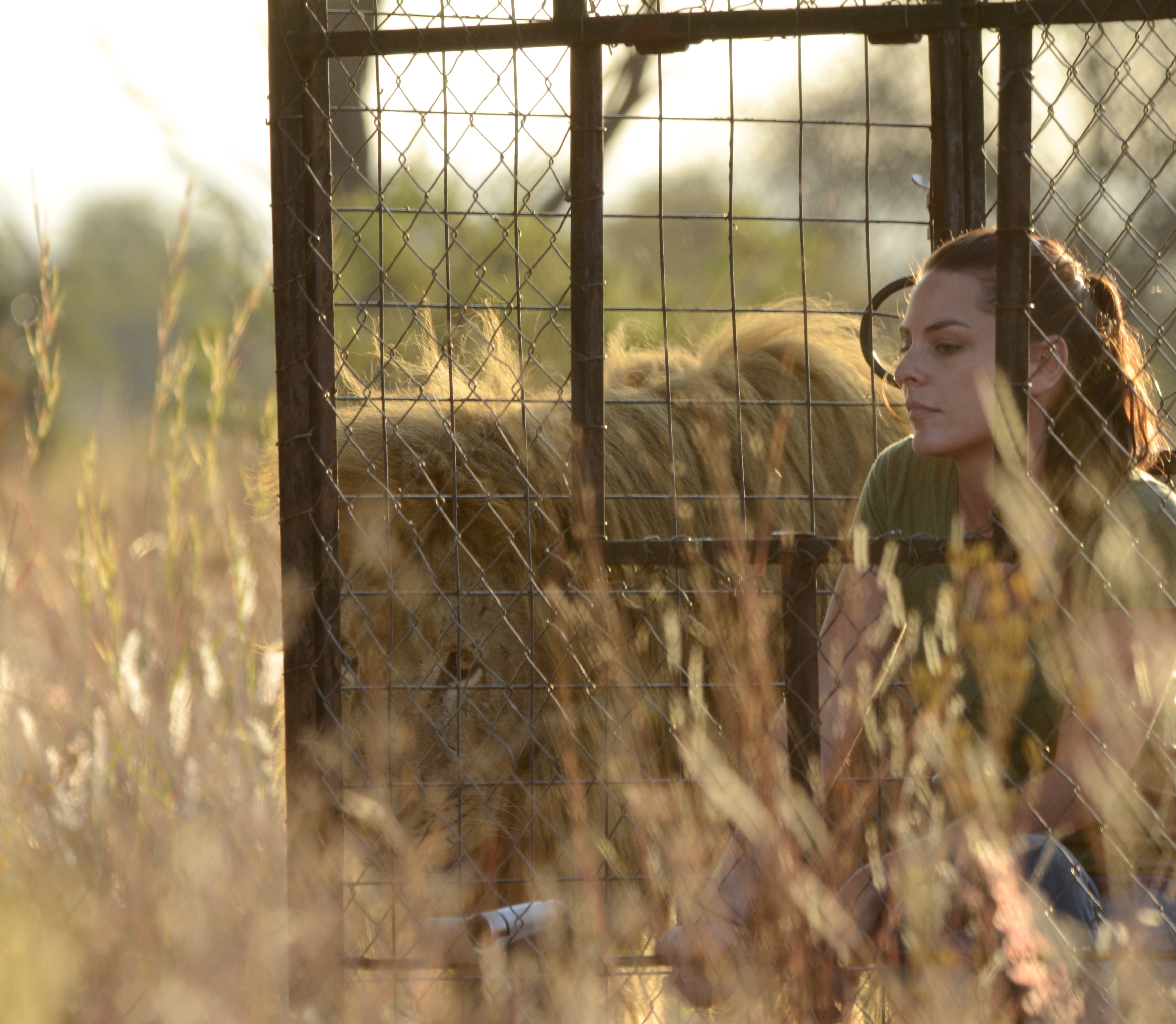
Natalia Borrego conducting lion research

Behavioral Ecologist · Wildlife Biologist

Natalia Borrego, PhD

How does ecological context shape behavior?

I study how ecological conditions shape behavior in social species by changing the opportunities animals have to interact, the payoffs they gain from acting with others, and the information they use to make decisions. Using African lions as my primary comparative system, I combine experiments, field observation, tracking, and whole-group biologging to understandwhich features of sociality are stable and which change with ecological context.

Max Planck Institute of Animal Behavior · University of Konstanz · University of Minnesota Lion Center

Research

The ecology of sociality: opportunity, payoff, and information.

My scientific trajectory began with the cognitive and behavioral foundations of social flexibility—innovation, learning, memory, social tolerance, and cooperative problem solving. I now place those capacities into ecological context, asking how environmental variation changes the opportunity to interact, the payoff from sociality, and the information animals use to make decisions.

01 · Opportunity

When can individuals interact?

Ecology changes whether social partners encounter one another in the first place. I ask how resource distribution, density, habitat structure, range size, and spatial separation shape association and social organization.

02 · Payoff

Where do the benefits of sociality emerge?

Opportunity to interact does not necessarily make collective action advantageous. I ask how ecology changes who pays the costs of social behavior, who receives the benefits, and where those benefits are realized.

03 · Information

How do animals make decisions under uncertainty and risk?

Animals can respond to ecological context only through information. I study how they detect groupmates, competitors, resources, and risk, and how that information shapes association, communication, coordination, and movement.

Much of this work is pursued through a jointly developed comparative African lion programme in which I am a co-PI, using ecological variation across Botswana, Namibia, and Zimbabwe to ask what is stable about sociality and what changes with context.

Teaching trajectory

From learning science to doing science.

I teach science as a way of thinking. Across courses and mentorship, I structure learning so students move from understanding concepts to making predictions, evaluating evidence, comparing explanations, and eventually developing questions they can investigate independently.

01 · Scientific reasoning

Build from understanding to inference.

I use Bloom's taxonomy as a practical progression: students first establish conceptual foundations, then apply, analyze, evaluate, and create with increasing independence.

02 · Research ownership

Questions become student projects.

My mentorship is designed to move students from structured entry points into thesis work, conference presentations, publications, and independent scholarship.

03 · Access & participation

More than one route into science.

Inclusive teaching, flexible participation, cross-cultural mentorship, and capacity building are part of how I widen access to scientific participation and ownership.

Research in motion

Latest Field Notes

Short updates from the field, new papers, student research, talks, public scholarship, and ongoing projects.

Field Note image

2026 · Publication

Beyond the Serengeti lion

A comparative perspective on what lion behavioral ecology looks like when research expands beyond a small number of intensively studied populations.

Read Field Note →
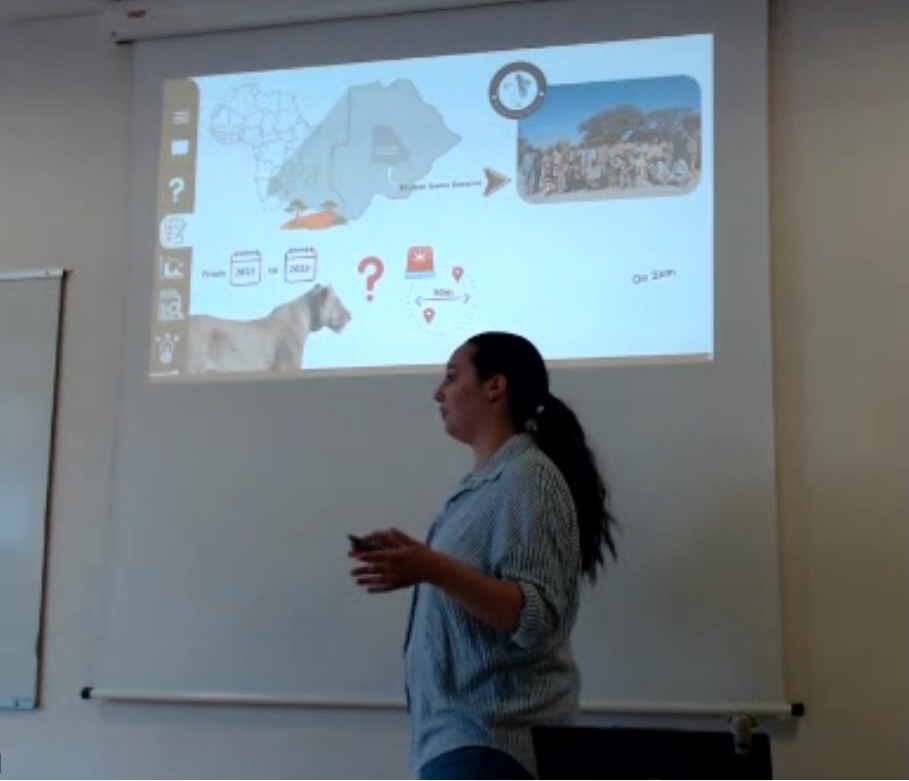
Candice Bazin presenting her MSc research

2026 · Student milestone

Candice Bazin successfully defends her MSc thesis

MSc intern Candice Bazin successfully defended her thesis and earned the highest thesis grade in her cohort. Her research combined tracker reconstructions and biologging to investigate fine-scale lion hunting behavior.

Read Field Note →
Field Note image

2026 · Student research

Hunting behavior from the lion's perspective

Student research uses tracker reconstructions and biologging to investigate fine-scale lion hunting behavior.

Read Field Note →